




Beyond the Star Rating: How to Judge a Hospital's Quality in Pakistan
As a General Physician, I see countless patients stressed by choosing the right hospital. The truth is, that high star rating on a review site can be deceiving. It might tell you about the coffee, but what does it say about the ICU's safety standards? I've broken down the exact, verifiable data points you need to look for—the "hidden data" that truly determines a hospital's quality.
HEALTHCARE
drkonainmuhammad
11/6/20253 دقيقة قراءة

The Digital Healthcare Revolution: Our New Starting Point
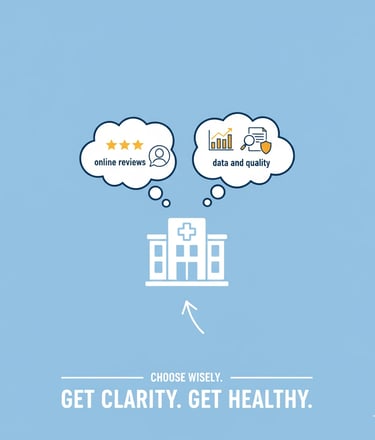
In the past, choosing a hospital was simple: you relied on word-of-mouth or the nearest option. Today, the patient journey starts on a screen. Before you've even spoken to a doctor, you've likely scrolled through dozens of star ratings, read detailed Facebook comments, and compared prices on health platforms.
This is the Digital Age of Healthcare, and while it offers unprecedented transparency, it also creates confusion. More information doesn't always lead to better decisions. As a General Physician, I want to equip you to move beyond the superficial reviews and look for the hard data that truly indicates quality care.
Online reviews are a tool, not the final answer. Let's learn how to use them wisely.
Section 1: Decoding Online Reviews—Stop Scrolling, Start Sifting
A 5-star rating might reflect a great waiting room, but a 2-star review might point to a serious systemic issue. Here is my framework for critically evaluating patient feedback:
Factor
What to Look For
Why It Matters (The "Hidden Data")The "Human" Factors
Consistent feedback (positive or negative) on staff attitude, empathy, and communication (doctors, nurses, and administrative staff).
In the Pakistani context, the quality of service delivery—how you are treated—is a crucial indicator of a hospital's overall culture of patient-centered care.
The Logistical Factors Specific, repeated mentions of wait times, cleanliness, facility maintenance, and billing transparency.These issues directly impact your peace of mind and recovery. Repeated complaints about long waits suggest poor operational efficiency.
The "Outcome" Factors
Look for detailed descriptions of the treatment process and the patient's perception of their recovery.Vague complaints are common, but look for trends. Did multiple patients feel their concerns were dismissed? This may signal a lack of thoroughness in clinical practice.
Red FlagsSuspicious Patterns: A sudden influx of 5-star reviews with generic comments, or a review that is overly emotional and lacks factual detail.Such patterns can indicate manipulation. Trust the reviews that offer specific narratives and constructive feedback.
Bottom Line on Reviews: They are an excellent measure of Patient Satisfaction (how they felt), but they are not a definitive measure of Clinical Quality (how well they were treated).
Section 2: The Critical Data Points That Really Matter
While online reviews offer the emotional context, these verifiable, structural data points offer the clinical and professional assurances you need.
1. Professional Credentials and Specialization
The Doctors: Is the doctor treating you a specialist, and are they registered with the Pakistan Medical and Dental Council (PMDC)? This information should be verifiable through the hospital's official website or a direct inquiry.
Case Volume Matters: For specialized or complex surgeries (e.g., orthopedic procedures, specific cancer treatments), hospitals that perform those procedures more frequently often have superior outcomes. Do your research: Ask if the hospital has a dedicated department for your specific condition.
Teaching Affiliation: Is the hospital affiliated with a major university or a known teaching institution? This often suggests a commitment to research, updated practices, and higher scrutiny of care standards.
2. Technology and Infrastructure
Modern Equipment: Does the hospital use up-to-date diagnostic and treatment technology (e.g., advanced imaging machines, specialized surgical equipment)? A hospital's investment in technology is a clear commitment to providing advanced care.
Digital Integration: Can you access your lab reports, prescriptions, or discharge summaries through a Patient Portal or a secure digital system? This signals organizational efficiency and a patient-friendly approach to data management.
3. Transparency and Safety (The Hardest Data to Find)
While safety data like infection rates or readmission statistics are not always publicly available in Pakistan, you can still seek assurances:
Ask Direct Questions: "What is your protocol for preventing hospital-acquired infections?" or "How often do you review your patient safety procedures?"
Accreditation: Check if the hospital holds any national or international accreditations (like ISO certification or other recognized quality standards). These signify that the facility is regularly audited for quality control.
Your Final Filter: The Authority of Your General Physician
In the age of digital noise, your most valuable resource remains the trusted, human advice of your Primary Care Physician.
Your GP (like myself) acts as the final filter. I can take the fragmented information from the internet—a good review here, a concerning statistic there—and synthesize it with my professional knowledge of local hospital reputations, physician competencies, and most importantly, your specific medical needs.
Don't navigate the digital maze alone. If you are weighing options based on online data, bring that information to your doctor. Together, we can translate patient satisfaction data into a clinically sound decision, ensuring you choose not just a popular hospital, but the right hospital for your health.